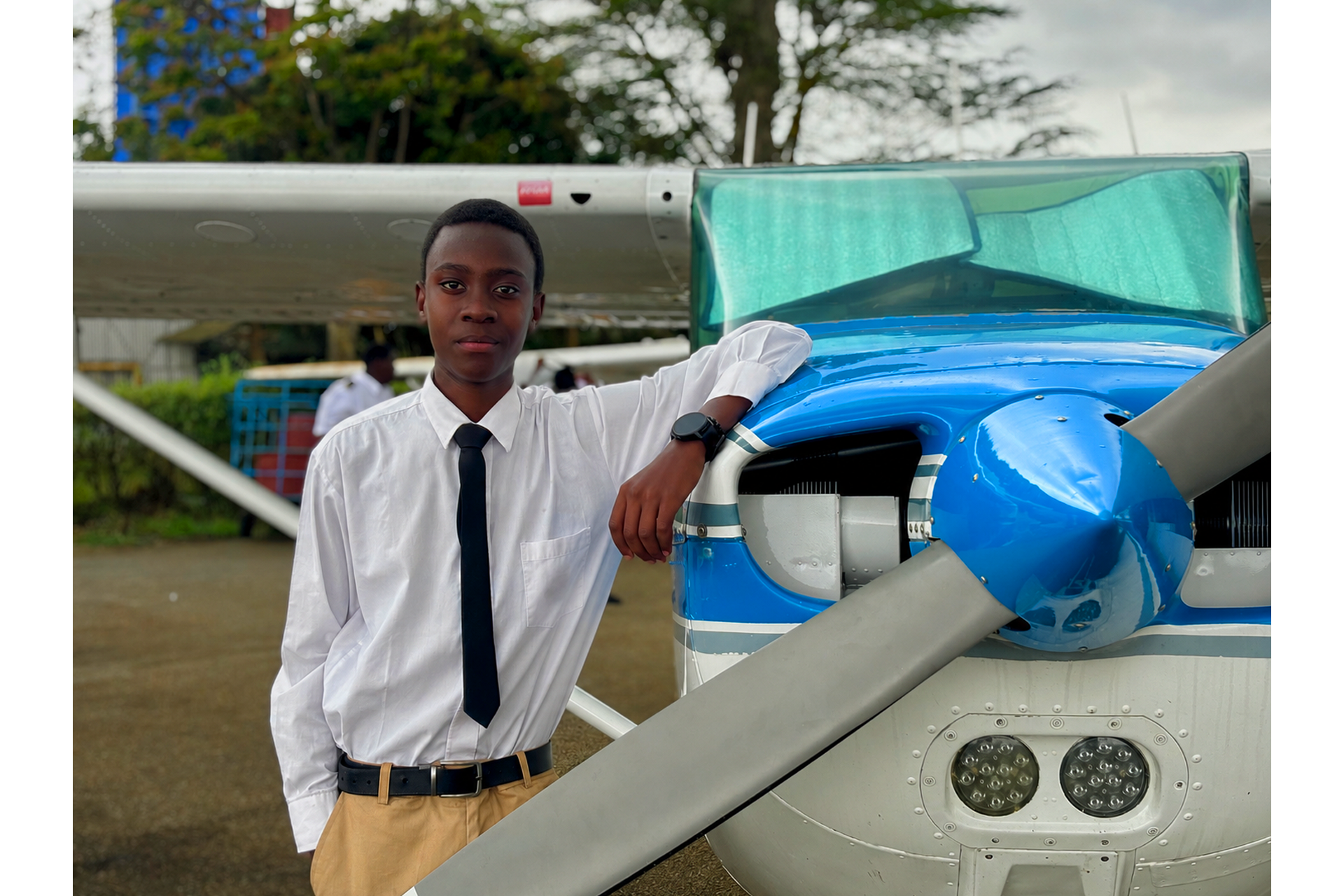
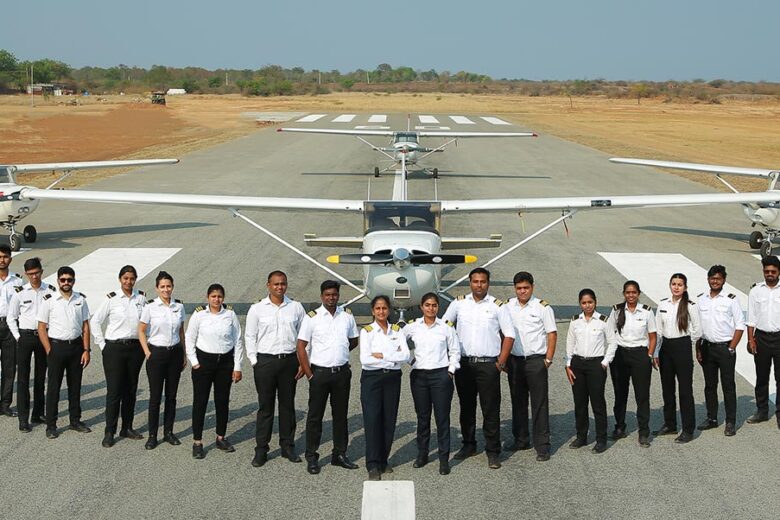
Aviation has the power to inspire curiosity, ambition, innovation, and national development. Yet for many young people in Ghana, the aviation industry remains distant, unfamiliar, and difficult to access. Their understanding of the sector is often limited to pilots, cabin crew, and commercial airlines, even though aviation includes a much broader range of careers, technologies, services, and professional opportunities.
Taking aviation education directly to schools and communities can help close this knowledge gap. It can introduce young people to the industry at an early age, guide them towards suitable academic pathways, connect them with professionals, and encourage them to see aviation as an achievable field of study, employment, entrepreneurship, and innovation.
For Ghana to build a strong and sustainable aviation industry, aviation education must move beyond airports, training institutions, and professional offices. It must reach classrooms, school clubs, community centres, youth groups, and families across the country.
Taking Aviation Education to Schools and Communities
Aviation has the power to inspire curiosity, ambition, innovation, and national development. Yet for many young people in Ghana, the aviation industry remains distant, unfamiliar, and difficult to access. Their understanding of the sector is often limited to pilots, cabin crew, and commercial airlines, even though aviation includes a much broader range of careers, technologies, services, and professional opportunities.
Taking aviation education directly to schools and communities can help close this knowledge gap. It can introduce young people to the industry at an early age, guide them towards suitable academic pathways, connect them with professionals, and encourage them to see aviation as an achievable field of study, employment, entrepreneurship, and innovation.
For Ghana to build a strong and sustainable aviation industry, aviation education must move beyond airports, training institutions, and professional offices. It must reach classrooms, school clubs, community centres, youth groups, and families across the country.
Starting Aviation Education Early
Children are naturally fascinated by aircraft and flight. This early curiosity provides an important opportunity to introduce them to the science, technology, teamwork, discipline, and creativity behind aviation.
At the basic school level, aviation can be used to make subjects such as mathematics, science, geography, information technology, and engineering more practical and engaging. Activities involving model aircraft, simple flight experiments, airport maps, weather observations, and aviation storytelling can help students connect classroom learning with real-world applications.
At the Senior High School level, aviation education becomes even more important. This is often the stage when students begin making decisions about university programmes, technical training, and future careers. Accurate guidance can help them understand the subjects, qualifications, licences, skills, and training pathways required for different aviation professions.
Early exposure can prevent students from making uninformed choices and help them prepare properly for careers in areas such as piloting, aircraft engineering, air traffic control, aeronautical information management, meteorology, airport operations, aviation safety, logistics, law, technology, and airline management.
Showing Students the Full Aviation Industry
One of the greatest challenges facing aspiring aviation professionals is the lack of reliable career information.
Many students believe the industry is limited to pilots and cabin crew. They may not be aware that every flight depends on the coordinated work of engineers, technicians, air traffic controllers, dispatchers, safety officers, meteorologists, ground-handling teams, marshallers, security professionals, data analysts, customer-service officers, regulators, and many others.
Aviation education programmes in schools can help students discover these less visible but equally important professions. Career talks, demonstrations, exhibitions, workshops, airport visits, and interactions with professionals can give students a more complete understanding of how the industry works.
For some students, meeting an aviation professional for the first time can be a life-changing experience. Speaking directly with a pilot, engineer, air traffic controller, marshaller, airline representative, or airport manager can make aviation feel more real and attainable.
These encounters also allow students to ask practical questions about education, training costs, professional responsibilities, working conditions, challenges, and career progression.
Establishing Aviation Clubs in Schools
School-based Aviation Clubs can provide a sustainable way to maintain students’ interest after an outreach visit or career presentation.
These clubs can organise aviation discussions, model aircraft projects, competitions, quizzes, educational videos, science activities, mentorship sessions, and visits to aviation facilities. They can also create leadership opportunities and help students develop teamwork, communication, research, and problem-solving skills.
Aviation Clubs can be established in basic schools, Senior High Schools, technical institutions, universities, and community learning centres. Existing science, technology, engineering, and mathematics clubs can also incorporate aviation-related activities into their programmes.
Teachers and career counsellors will play an important role in sustaining these clubs. With suitable training, educational materials, and access to industry professionals, they can continue guiding students and supporting their aviation interests throughout the academic year.
Reaching Communities Beyond Major Cities
Aviation education should not be limited to schools in Accra or communities close to major airports.
Talented and ambitious young people can be found throughout Ghana, including in rural communities and regions where students may have little or no direct exposure to aviation. Some may never have visited an airport, entered an aircraft, or spoken with anyone working in the industry.
Nationwide outreach is therefore essential.
Mobile aviation exhibitions, regional school tours, community career fairs, radio programmes, online learning sessions, and partnerships with local schools can make aviation education more inclusive. These activities can help ensure that a student’s location or social background does not prevent them from learning about aviation opportunities.
Community engagement should also involve parents, teachers, traditional leaders, youth organisations, local authorities, and religious institutions. These groups often influence the educational and career choices of young people. When they understand the range of opportunities within aviation, they are better able to encourage and support interested students.
Connecting Education with Practical Experience
Aviation is a practical and highly specialised industry. Students therefore benefit greatly from experiences that go beyond classroom presentations.
Airport visits, aircraft displays, air traffic control demonstrations, maintenance facility tours, model aviation activities, flight simulators, workshops, and mentorship programmes can make aviation education more memorable and meaningful.
Practical exposure also helps students understand the standards of discipline, safety, teamwork, and professionalism expected within the industry.
Where possible, schools and aviation organisations can collaborate to provide internships, job-shadowing opportunities, holiday programmes, research projects, and technical demonstrations. These experiences can help students test their interests and make more informed career decisions.
Universities and technical institutions can also contribute by organising open days, aviation innovation competitions, public lectures, and practical workshops for school students.
Supporting Teachers and Career Counsellors
Teachers and career counsellors are often the first people students approach for educational and professional guidance. However, many may not have detailed information about aviation careers, training institutions, licensing requirements, or emerging opportunities.
Supporting educators is therefore an important part of taking aviation education to schools.
Training sessions, career guides, lesson materials, industry presentations, and digital resources can equip teachers with accurate and current information. This will allow them to guide students more effectively and identify those who may have the interest and potential to pursue aviation-related careers.
Teachers can also help integrate aviation examples into subjects such as physics, mathematics, geography, computing, business, and environmental science.
By strengthening the knowledge of educators, aviation outreach can continue long after industry professionals have completed their visits.
Promoting Inclusion and Equal Opportunity
Aviation education must deliberately reach girls, students from underserved communities, persons with disabilities, and young people who may not traditionally see aviation as accessible.
Some students may assume that aviation careers are only for wealthy families, people living in major cities, or those with personal connections in the industry. Others may be discouraged by gender stereotypes, training costs, or limited access to information.
These barriers can be addressed through visible role models, scholarships, mentorship, inclusive outreach, and clear information about different career pathways.
Girls should be encouraged to pursue technical, operational, leadership, and management roles across the industry. Students should also be shown that aviation requires people with different abilities, academic backgrounds, and professional interests.
An inclusive approach will allow Ghana to draw talent from a much wider population and build a more diverse and innovative aviation workforce.
Aviation Education and National Development
Taking aviation education to schools and communities is not only a career-guidance initiative. It is an investment in Ghana’s future.
The aviation industry supports tourism, trade, logistics, technology, emergency services, agriculture, security, education, and international cooperation. As the sector grows, Ghana will require skilled professionals who can operate modern systems, maintain safety standards, develop new services, and respond to emerging technologies.
The country will need pilots, engineers, air traffic professionals, airport planners, safety inspectors, technicians, data specialists, drone operators, logistics experts, researchers, and managers.
Building this workforce must begin before students enter university or professional training. By creating early awareness and clear educational pathways, Ghana can prepare a stronger pipeline of young people for future opportunities.
Aviation education can also encourage entrepreneurship. Students may develop ideas in drone services, tourism, software, logistics, aircraft modelling, data analysis, training, and other aviation-related businesses.
The Role of Aero Club Ghana
Aero Club Ghana is committed to making aviation education more accessible to students and communities across the country.
Through school outreach programmes, career talks, Aviation Clubs, exhibitions, mentorship, professional visits, competitions, and educational partnerships, the Club seeks to bring the aviation industry closer to young people.
The Club can serve as a bridge between schools, communities, aviation professionals, airlines, airports, training institutions, universities, government agencies, and other stakeholders.
By bringing these groups together, Aero Club Ghana can help provide accurate information, practical exposure, mentorship, and opportunities for young people who are interested in aviation but may not know where to begin.
The Club also encourages aviation professionals to volunteer their time and share their experiences. Their participation can inspire students, strengthen career guidance, and help develop the next generation of aviation professionals.
Inspiring Dreams and Creating Pathways
Inspiration is important, but it must be followed by guidance and opportunity.
A student may become interested in aviation after seeing an aircraft, attending a school presentation, building a model plane, meeting a professional, or visiting an airport. The next step is to help that student understand what to study, where to train, how to prepare, and whom to approach for support.
Taking aviation education to schools and communities creates these pathways.
It allows young people to move from curiosity to knowledge, from knowledge to preparation, and from preparation to meaningful participation in the aviation industry.
Ghana’s future pilots, engineers, air traffic controllers, safety professionals, airport managers, innovators, and aviation leaders may already be sitting in classrooms across the country. What many of them need is exposure, encouragement, information, and a platform that helps them take the first step.
By bringing aviation education closer to schools and communities, Aero Club Ghana can help turn young dreams into real opportunities and contribute to the development of a stronger, more inclusive, and more competitive aviation industry for Ghana.
Aeroclub of Ghana Aviation Education in Ghana Aviation Ghana
Last modified: July 29, 2026